Cross Country Healthcare Hero ImageCross Country Healthcare Hero Image

Vendor Management System (VMS)

UI / UX Design | Product Strategy | Design Systems | Research | Prototyping
Project Type:
Enterprise Vendor Management System (Healthcare Staffing)
Duration:
3+ Years (MVP -> Scaled Enterprise Platform)
My Role:
Lead Product Designer — Owned UX/UI strategy, design system, and cross-platform experience; guided product design from MVP through enterprise scale.
Problem / Opportunity:
Cross Country Healthcare needed to modernize workforce management by replacing fragmented, manual processes with a centralized Vendor Management System. The platform needed to support complex healthcare staffing workflows while delivering clear, actionable data to multiple user types.
Approach:
I joined one year into development to lead UI and UX for the MVP and beyond. In addition to refining existing designs, I established a long-term product vision, interaction patterns, and a scalable design system. I worked closely with offshore developers, SMEs, and sales and marketing partners to align user needs with technical and business constraints.
Outcome:
Delivered a cohesive, scalable VMS platform that improved usability, reduced design inconsistencies, and enabled faster feature delivery as the product evolved.
Role-Based Dashboards & Core UX Improvements
Problem
Role-based dashboards failed to surface relevant, actionable data, leading to inefficiencies and increased cognitive load across Clients, MSPs, and Suppliers.
Solutions
  • Redesigned landing experiences and dashboards to surface role-specific insights for Clients, MSPs, and Suppliers
  • Improved navigation and workflow clarity to reduce cognitive load
  • Introduced consistent interaction patterns across the platform
  • Extended role-based dashboard experiences to the Client mobile app, enabling on-the-go visibility into shifts, bookings, and key actions
Samples:
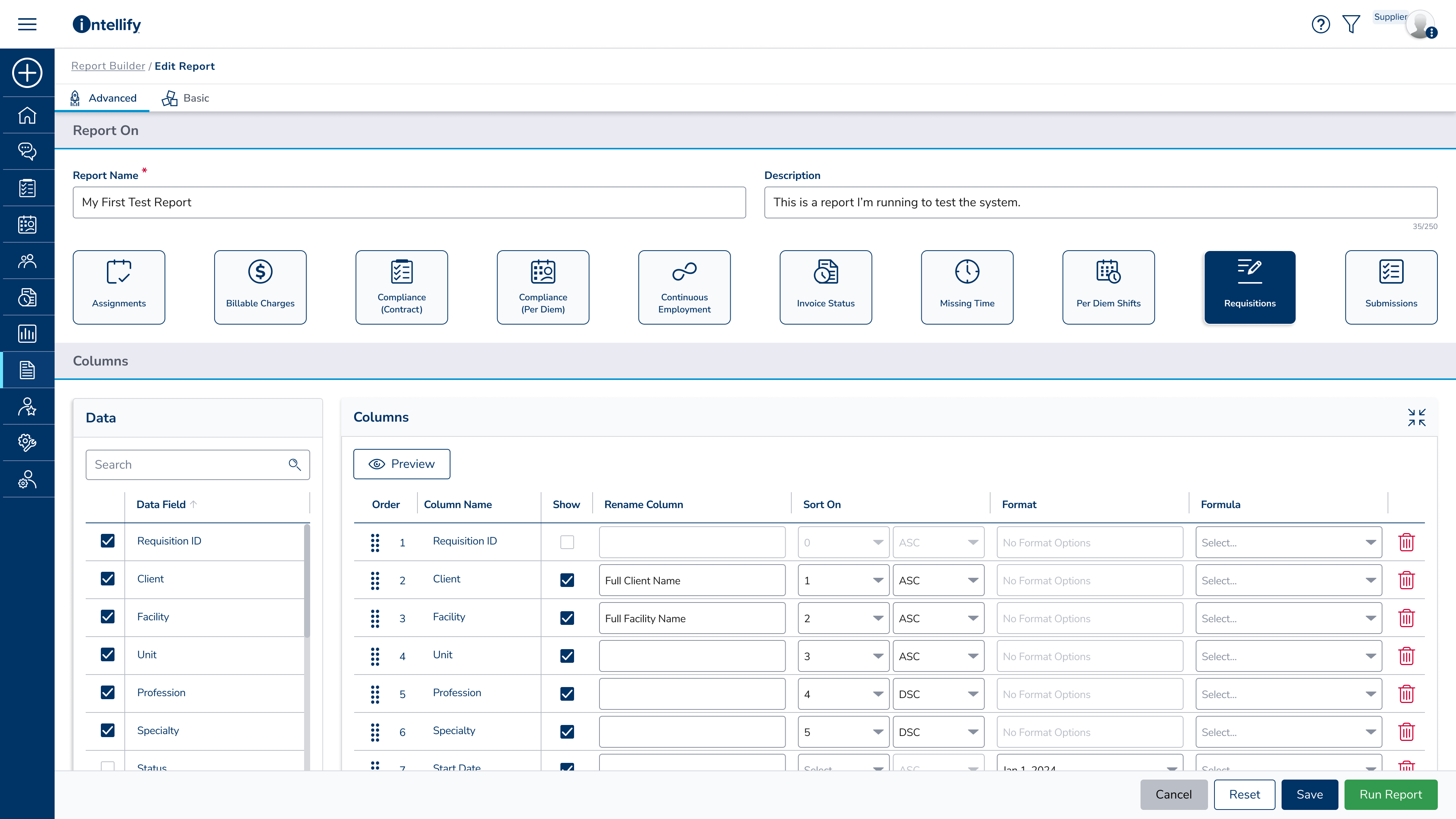
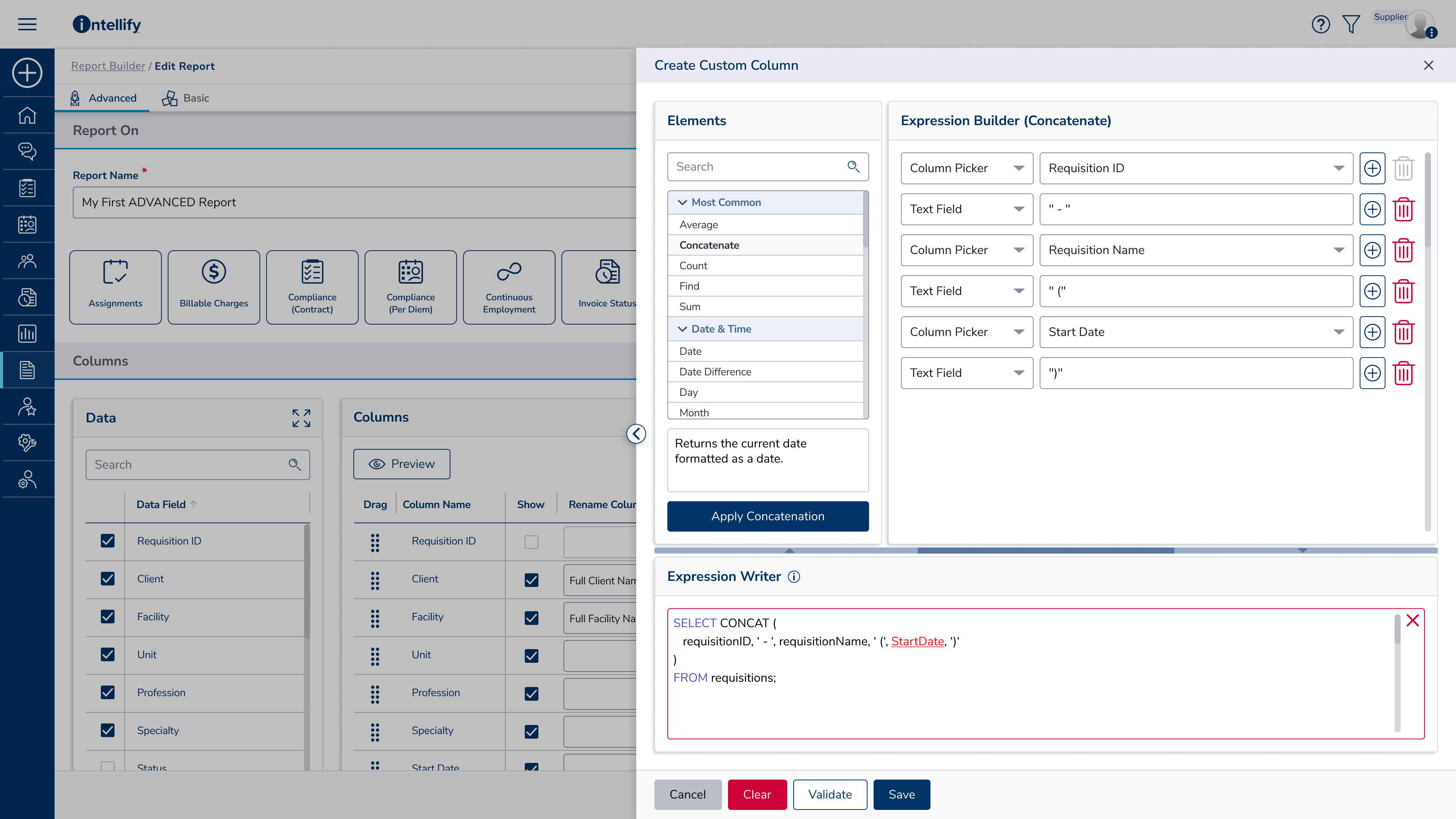
Report Builder (Advanced Reporting & Data Export)
Problem
Operational and leadership users needed flexible reporting to support workforce planning, compliance tracking, and financial analysis. Existing reporting tools were rigid, difficult to use, and required manual workarounds to extract meaningful insights.
Solutions
I designed a powerful yet intuitive Report Builder that supports both non-technical users and advanced users with complex reporting needs.
  • Enabled users to build custom reports using a guided, visual interface
  • Supported advanced configurations for power users, including complex field selection and formatting
  • Designed clear validation, previews, and error states to reduce report failures
  • Supported multiple output formats, including on-screen viewing and export-ready files
  • Ensured reporting workflows scaled across roles and large data sets
Samples:
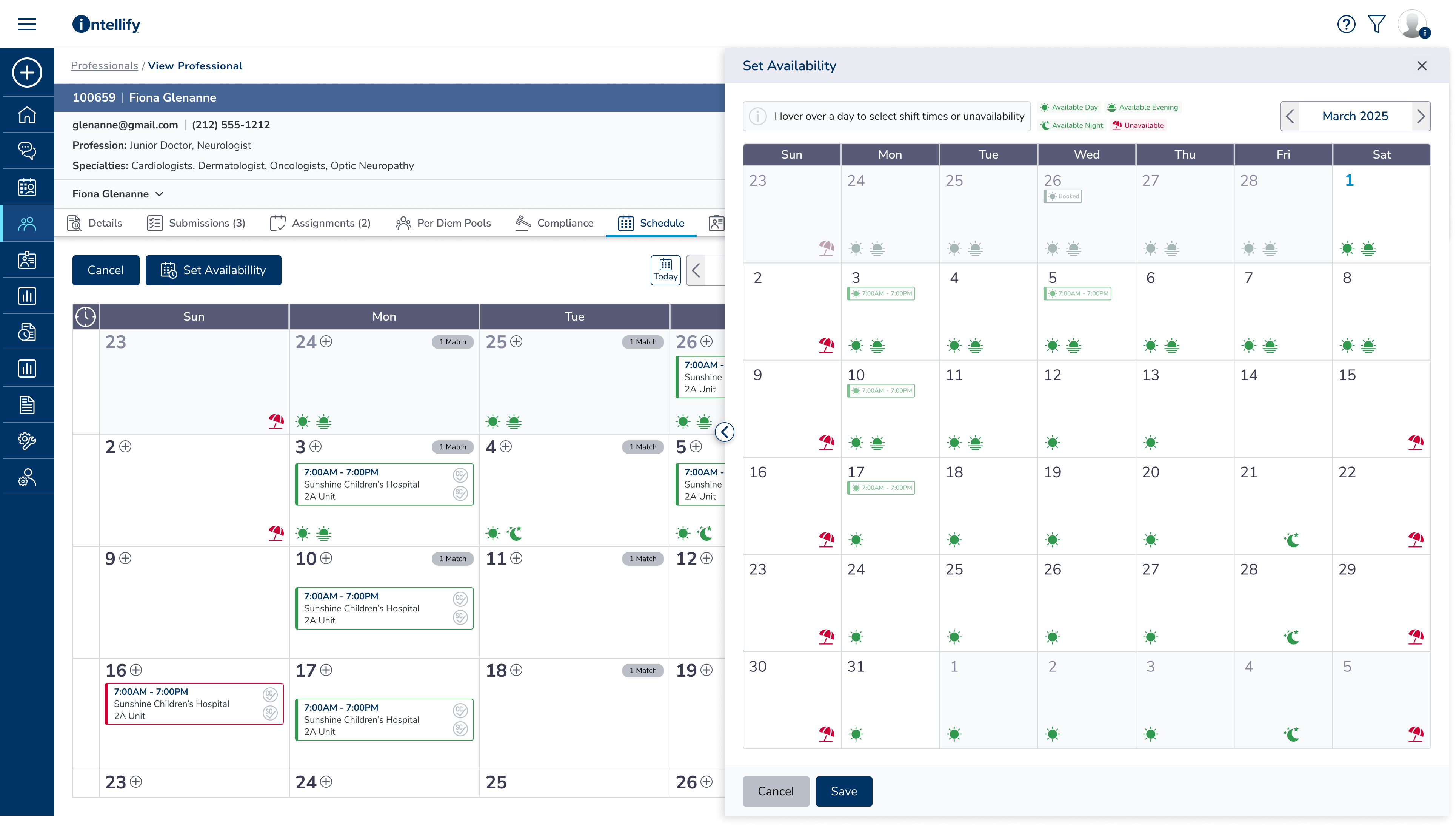
Professional Availability Management
Problem
Healthcare professionals needed a fast, reliable way to communicate availability across multiple facilities, shifts, and time ranges. Existing workflows were time-consuming, error-prone, and created downstream issues for staffing teams when availability data was incomplete or outdated.
Solutions
I designed the Availability experience to make it intuitive, flexible, and reliable across web and mobile.
  • Designed a calendar-based interface that allows professionals to set availability at scale
  • Supported recurring patterns, exceptions, and one-off availability updates
  • Reduced friction by minimizing required inputs and surfacing clear system feedback
  • Ensured availability data was immediately actionable for downstream staffing workflows
Samples:
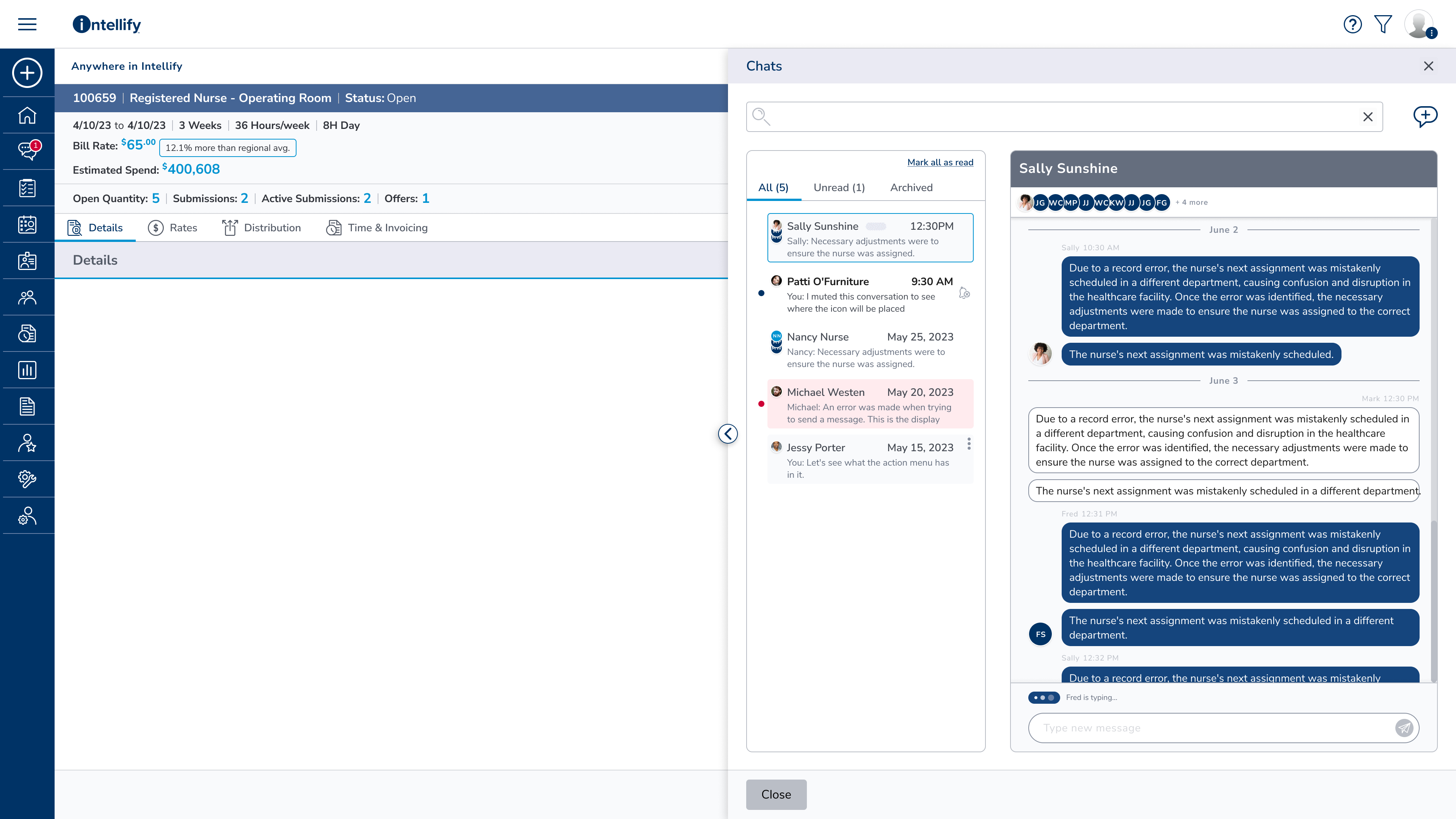
Communication & In-App Chat
The in-app communication experience provides contextual, real-time messaging while maintaining consistency across web and mobile platforms.
Problem
Communication between healthcare professionals, clients, suppliers, and MSPs was fragmented across external tools, emails, and phone calls. This led to missed messages, delayed responses, and limited context around shifts, assignments, and staffing decisions—especially when users moved between web and mobile.
Solutions
I designed a unified in-app communication experience that maintained consistency across web and mobile while adapting to platform-specific interaction patterns.
  • Designed a centralized chat experience embedded directly within staffing workflows
  • Ensured message context (shift, assignment, requisition) was always visible and accessible
  • Established consistent interaction patterns across web and mobile to reduce learning curves
  • Optimized layouts and interactions for mobile without sacrificing feature parity
  • Designed clear notification and unread states to support time-sensitive communication
Samples:
Mobile Chat ListMobile Chat ChattingMobile Chat WrittingMobile Group ChatMobile Group Chat Contact Information
Design System & Cross-Platform Consistency
A unified design system ensured consistency, reduced design debt, and enabled faster, more reliable feature delivery across platforms.
Problem
As the platform expanded across web and multiple mobile applications, UI patterns, colors, and components became inconsistent. A corporate branding overhaul further amplified discrepancies, slowing development, increasing design debt, and creating fragmented user experiences across tools.
Solutions
I led the creation of a unified, scalable design system that aligned product UX needs with updated corporate branding and supported consistent experiences across web and mobile.
  • Conducted a full inventory of existing designs to identify inconsistencies and redundancies
  • Defined standardized typography, color tokens, iconography, spacing, and component behaviors
  • Designed reusable, responsive components adaptable across web and mobile platforms
  • Established clear interaction patterns to ensure consistency without sacrificing platform-specific UX
  • Partnered closely with engineering to ensure components were feasible, reusable, and scalable
Samples:
Handoff, Delivery & Iteration
A structured handoff and collaborative delivery process ensured complex workflows were implemented accurately and evolved through continuous iteration.
Problem
As the VMS scaled in complexity across roles, platforms, and feature sets, successful delivery required tight alignment between design, product, and engineering. Without clear handoff and shared understanding, complex workflows risked misinterpretation, rework, and delayed releases.
Solutions
I established a structured, collaborative handoff process that ensured design intent translated cleanly into production while supporting ongoing iteration.
  • Partnered closely with product and engineering to define clear user stories and acceptance criteria
  • Delivered detailed, annotated designs and interactive prototypes to communicate complex behaviors and edge cases
  • Used high-fidelity prototypes to validate workflows with stakeholders prior to development
  • Supported development through active collaboration, reviews, and design clarifications
  • Participated in SIT and UAT testing to validate implementations against design intent and real-world workflows
  • Iterated on designs post-launch based on user feedback, testing insights, and evolving business needs
Samples: